Paul Freedman
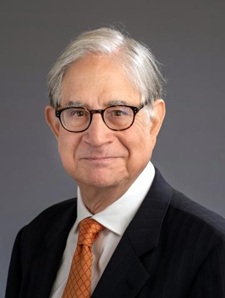
Paul Freedman retired from the Yale History department in 2026 after twenty-nine years at Yale. Before that, he taught at Vanderbilt University (1979–1997). His research has been concentrated on the history of the European Middle Ages and, more recently, on American food history.
Professor Freedman grew up in New York City and attended Walden, a progressive school. His parents said they didn’t want him to have to get under a desk periodically for air-raid drills mandated by NY public schools in the 1950s. After an intriguing first year at Princeton, where he managed to get arrested in an anti-Vietnam War demonstration, Paul reverted to the quirky progressive educational model by transferring to the University of California at Santa Cruz, a small, experimental branch of the already beleaguered UC system. Graduating in 1971, he received his PhD in medieval history from UC Berkeley in 1978. His original intention had been to study England, especially its church history, but at the advice of the late Thomas Bisson, he devoted himself to research on medieval Catalonia, possessed of immensely rich archives yet at that time little known outside of Spain.
An interest in the history of food and cuisine began in 2003 when Professor Freedman had a fellowship at the New York Public Library’s Center for Scholars and Writers in order to work on a book concerning the demand for spices in the Middle Ages. An exhibit of menus in the library’s immense collection influenced his desire to understand the structures and evolution of American taste in connection with such topics as racial attitudes, the imagination of gender differences, and immigration.
He is the author of several books on medieval Spain, most recently The Splendor and Opulence of the Past: Studying the Middle Ages in Enlightenment Catalonia (2023). In 2007 he edited Food: The History of Taste, translated into ten languages. His best-known book on food history is Ten Restaurants that Changed America (2016).
During his career, Professor Freedman received fellowships from the Guggenheim Foundation, the ACLS, and the NEH. He is a fellow of several Catalan Academies, including the Catalan Academy of Gastronomy, as that body’s only foreign member. He is a fellow of the American Academy of Arts and Sciences and the American Philosophical Society.